

The oe-tag on 13 June 2025 live in Halle (Saale)!
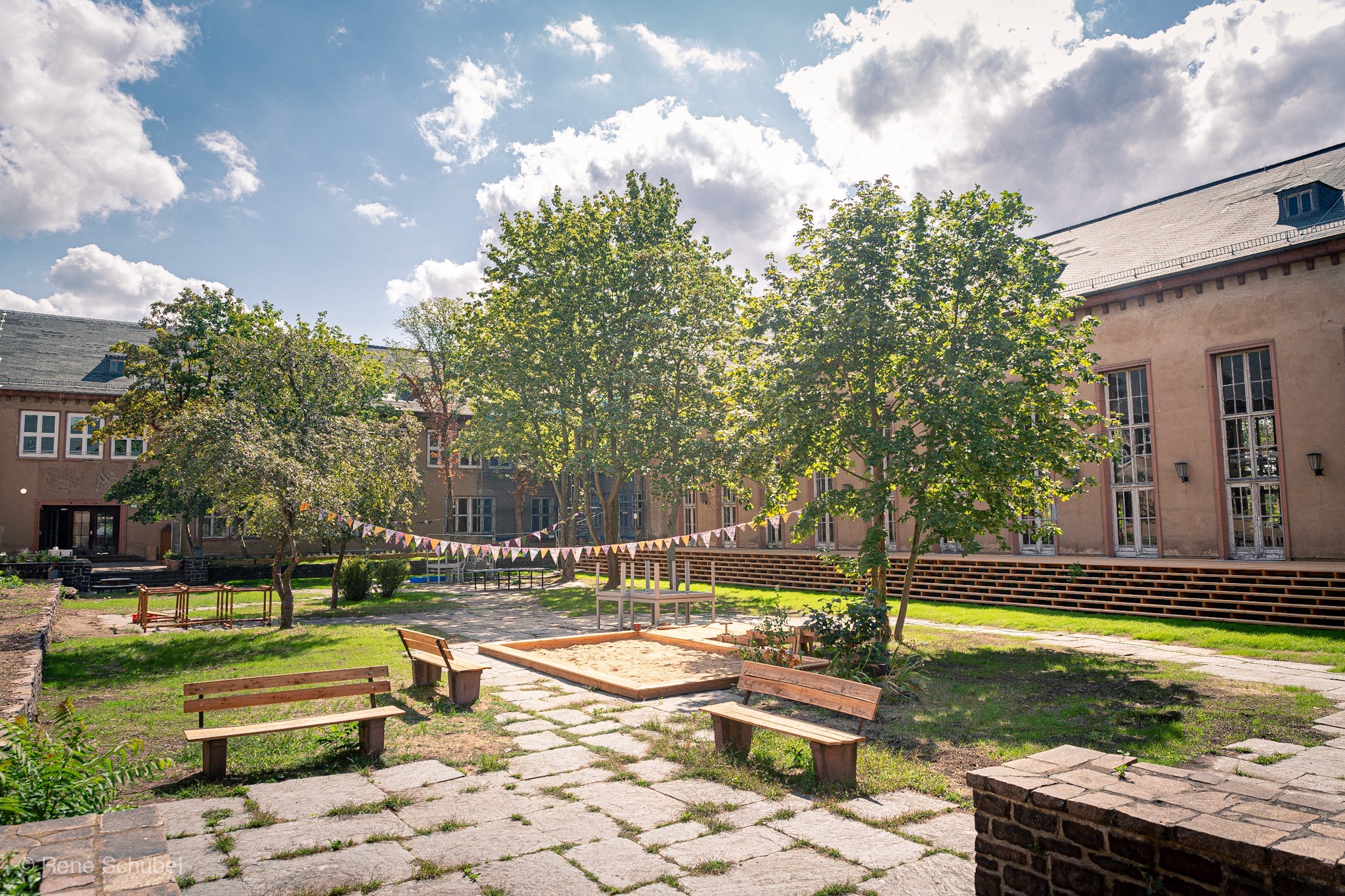
The oe-tag in Berlin took place on 13 June at Bildungshaus Riesenklein, Hoher Weg 4, 06120 Halle/Saale. We would like to thank all participants for your contributions and for helping to shape the event together.
For those interested, we are leaving the workshop descriptions online and invite you to take a look at the pictures and impressions of the day.
Your SOCIUS team
Thirty-five years after the fall of the Berlin Wall, German reunification has many faces. Some are visible – in figures, structures and privileges. Others are hidden in biographies, attitudes and language patterns. And still others only reveal themselves in subtle moments of misunderstanding or irritation in everyday working life.
In organisations, we often encounter these experiences: as unspoken differences in leadership styles, as tensions within teams, as silent questions about belonging, being seen or power.
What does it mean to go through life and organisations with an East or West biography? What traces have ruptures, transformations and different starting conditions left behind – in our self-image, in our forms of communication, in what is considered „normal“?
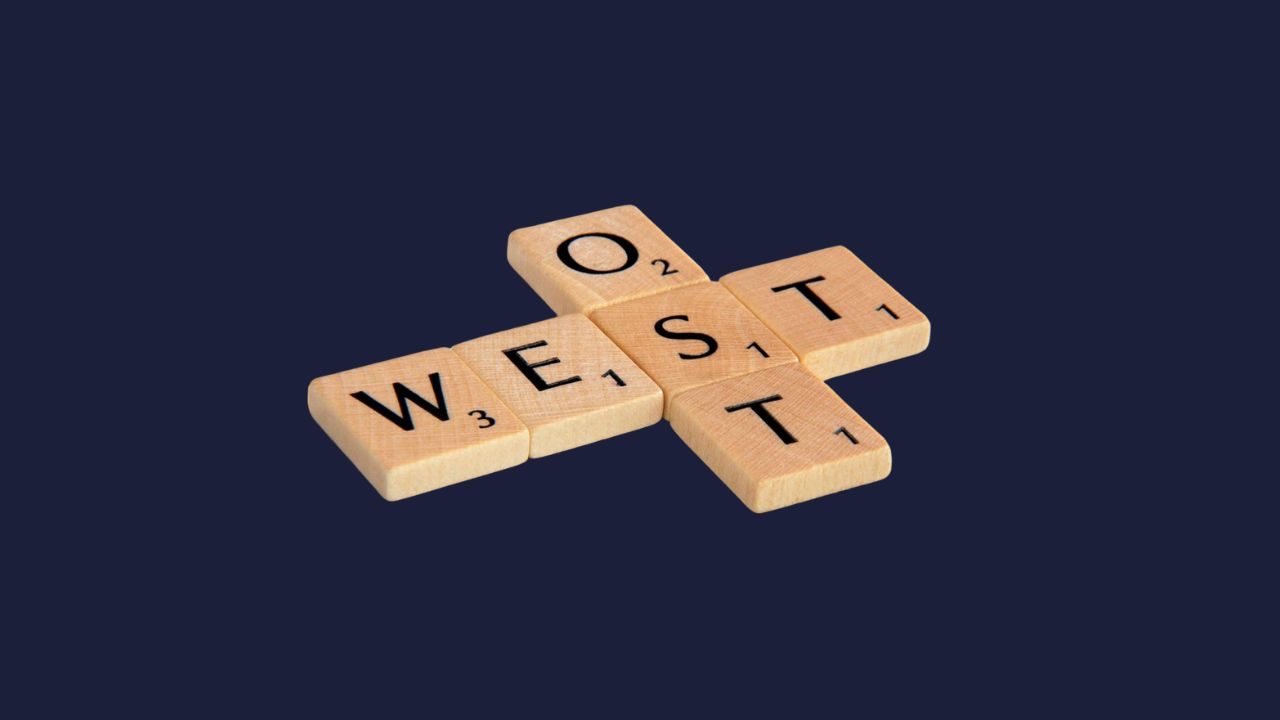
oe-tag 2025
The oe-tag 2025 invites you to join in a search for clues:
???? A day when personal stories are given space.
???? A day to explore subtle differences – or to discover connections where we expected differences
???? A day on which we approach the complexity of origin, belonging and change with openness and respect.
Together, we explore what it takes for organisations to become places where diversity does not divide but unites. And what we can learn – from the diversity of East and West German experiences – for the future of solidarity and coexistence.
On Friday, Lykke Langer will be offering a workshop at oe-tag.
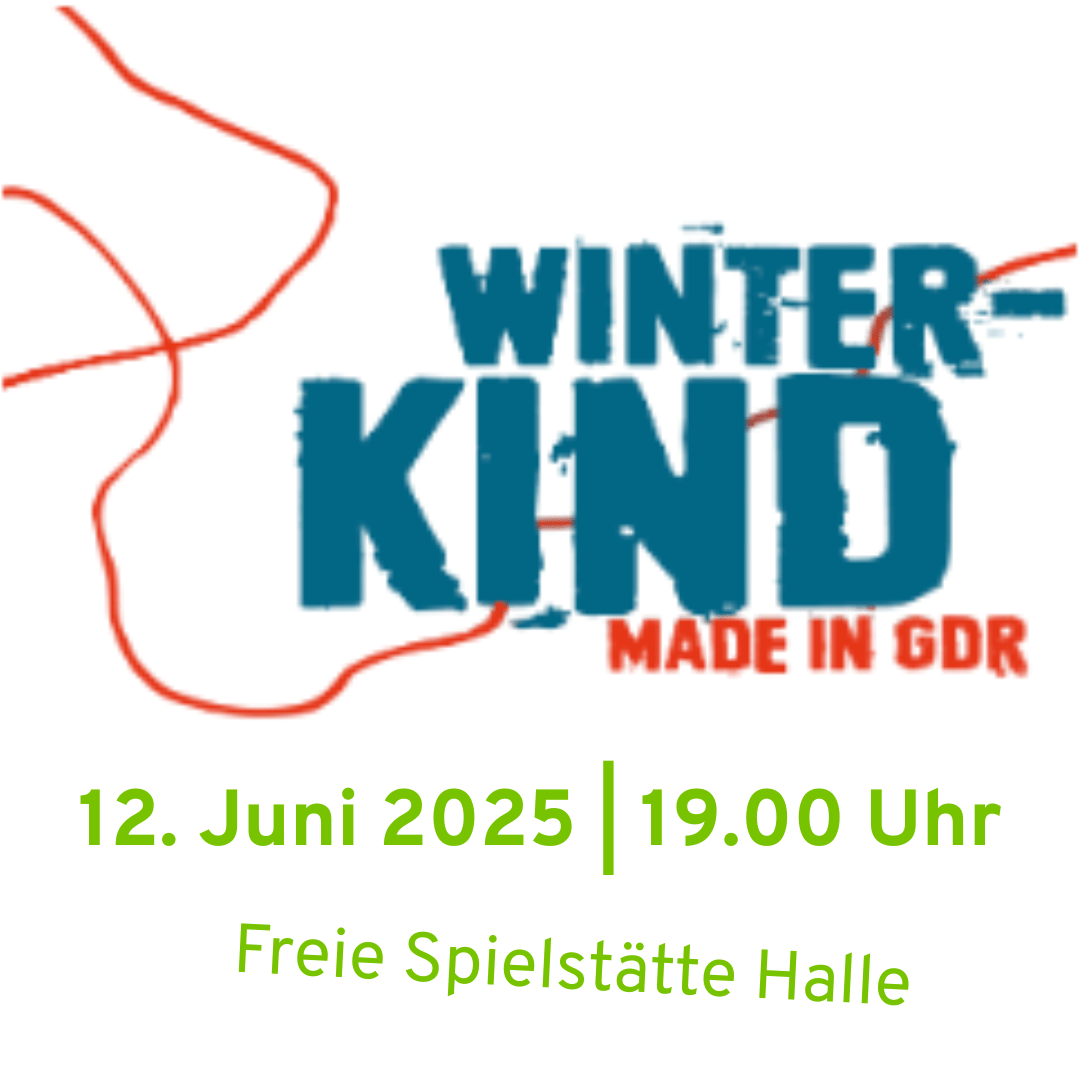
On the eve of oe-day:
An autobiographical theatrical journey
A production by FEINE ESSENZ AG (Leipzig)
WINTERKIND is an autobiographical solo theatre performance that tells the story of growing up in the GDR system and the consequences that are still felt today. The production captivates with its extraordinary interweaving of past and present in animated and AI-generated videos as well as audio art pieces, in which contemporary witnesses also have their say.
Lykke Langer plays herself as a solo performer.: distant and very close, ironic, tragic, bitter, funny, punk – but never preachy!
place
Riesenklein Educational Centre, Hoher Weg 4, 06120 Halle/Saale
childcare
If you require childcare for the day, please let us know and we will find a solution together.
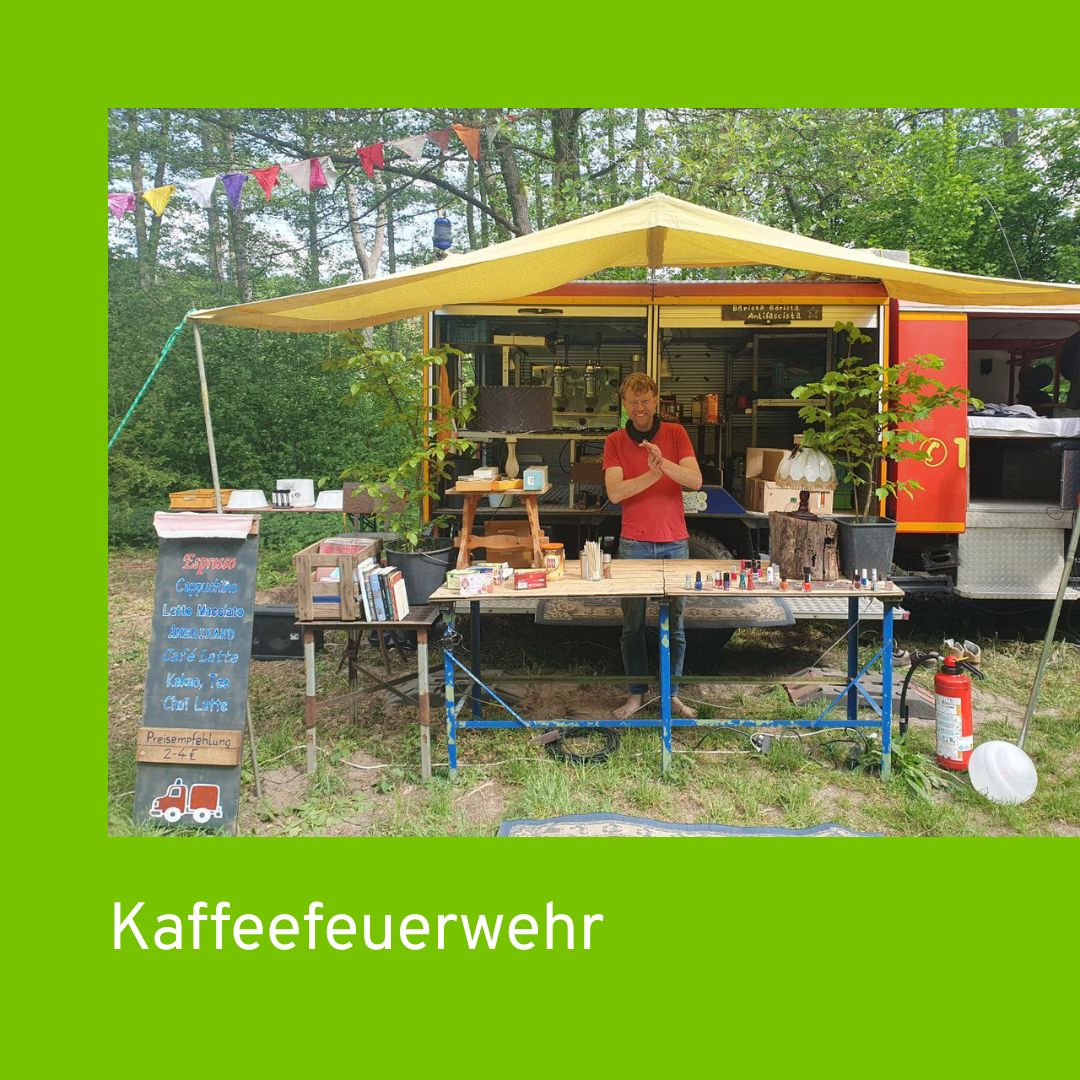
Open-air café – Coffee on Fire
“We are a small group with a keen interest in people and a great love of good coffee – and an old fire engine that we have converted into a mobile open-air café. On board: a beautiful old portafilter machine, a small selection of games and literature, and an assortment of fine coffee specialities and hot drinks.
When we show up, we create a space for people to linger and exchange ideas – with open discussions and a spirit of solidarity. Our coffee is not only invigorating, but also political: we use your donations to support left-wing projects, social movements and anti-fascist work.
Come by, have an espresso, latte or tea with us – and see for yourself. Coffee is not neutral – and that's a good thing.
Workshop overview 2025
„Generation Z(ukunft) Ost – New perspectives on East German identities“
How do young people experience eastern Germany today?
In this workshop, we focus on the perspectives of Generation Z: What experiences shape them? Why are questions of origin, identity and belonging coming back into focus?
Together, we are opening up a space for intergenerational exchange – and creating connections between different East German realities and self-perceptions.
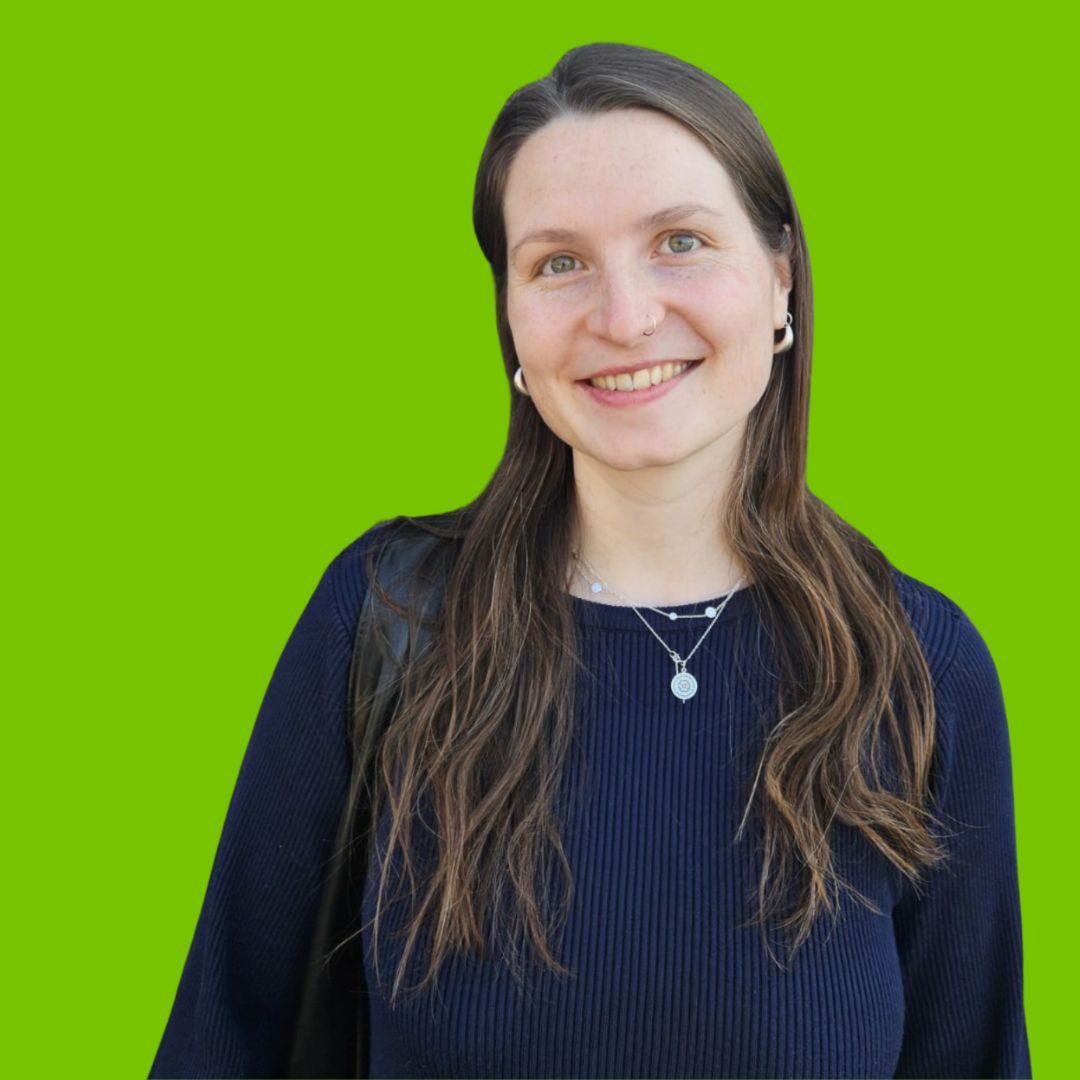
Lisa Trebs
Lisa Trebs (born in 1997) was born and raised south of Leipzig and now lives in Bonn. She studied cultural studies and international politics (BA) as well as development studies (MA) in Denmark, France, South Korea and the United Kingdom. It was only through experiences outside the East that she discovered her East German identity and developed a desire to shape other perspectives on the East. Together with Vanessa Beyer, she launched „(K)Einheit“ as a film project in 2022. She is now committed to making young East German voices visible through the initiative.
Home is more than a place: childhood worlds between East and West
How did we experience home – or homelessness?
In this workshop, we explore how ideological systems, education and the spirit of the times shaped our upbringing in the East or West. Which values remain with us to this day? Which structures shaped our thinking and feeling?
Using psychodrama methods, we immerse ourselves in personal memories in a moving and lively way. Through dialogue about influences, breaks and transformations, space is created for new insights and connections – between stories, generations and experiences.
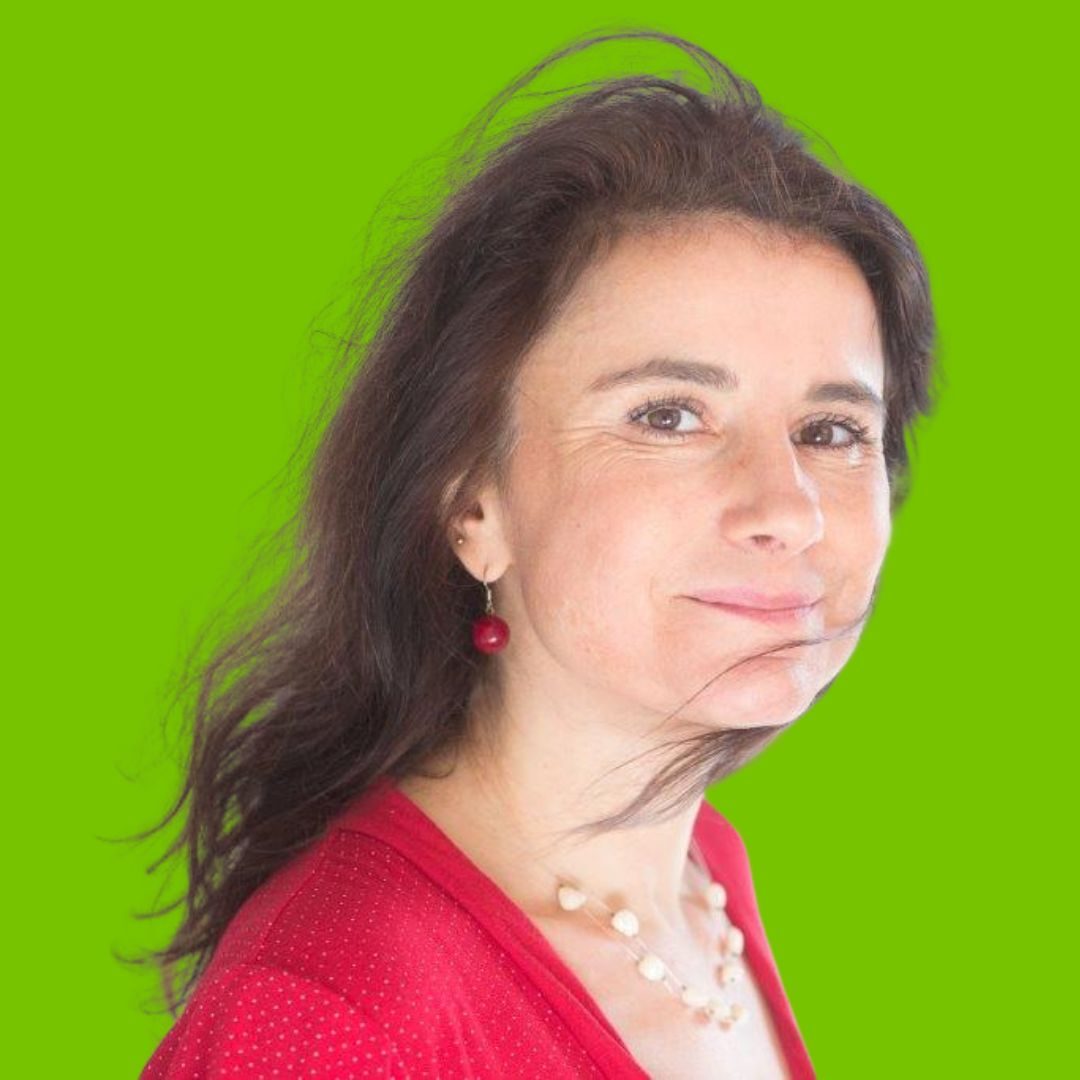
Lykke Langer
What are the stories behind the stories we tell ourselves? The things that are left unsaid, perhaps because they cannot be said? Lykke Langer's work revolves around the careful disclosure of this subtle essence in order to enable communication and understanding. She comes from Leipzig and works as a performer, director and author for theatre and radio, most recently creating the production „WINTERKIND – Made in GDR“, in which she recounts her upbringing in the GDR. In recent years, Lykke has come to love working with groups in a playful, lively and profound way, combining her experience in theatre and non-violent communication with her psychodrama work.
What is cohesion all about?
The workshop is a search for connectable open ends around the topic of „cohesion in the GDR“. What of this is myth, ideology or nostalgia, and what has substance that could still be relevant today? We delve into two phenomena through dialogue, biography and philosophy:
- Being Dependent on Each Other as a Source Self-organisation
- The brigade as a form of organised shared responsibility
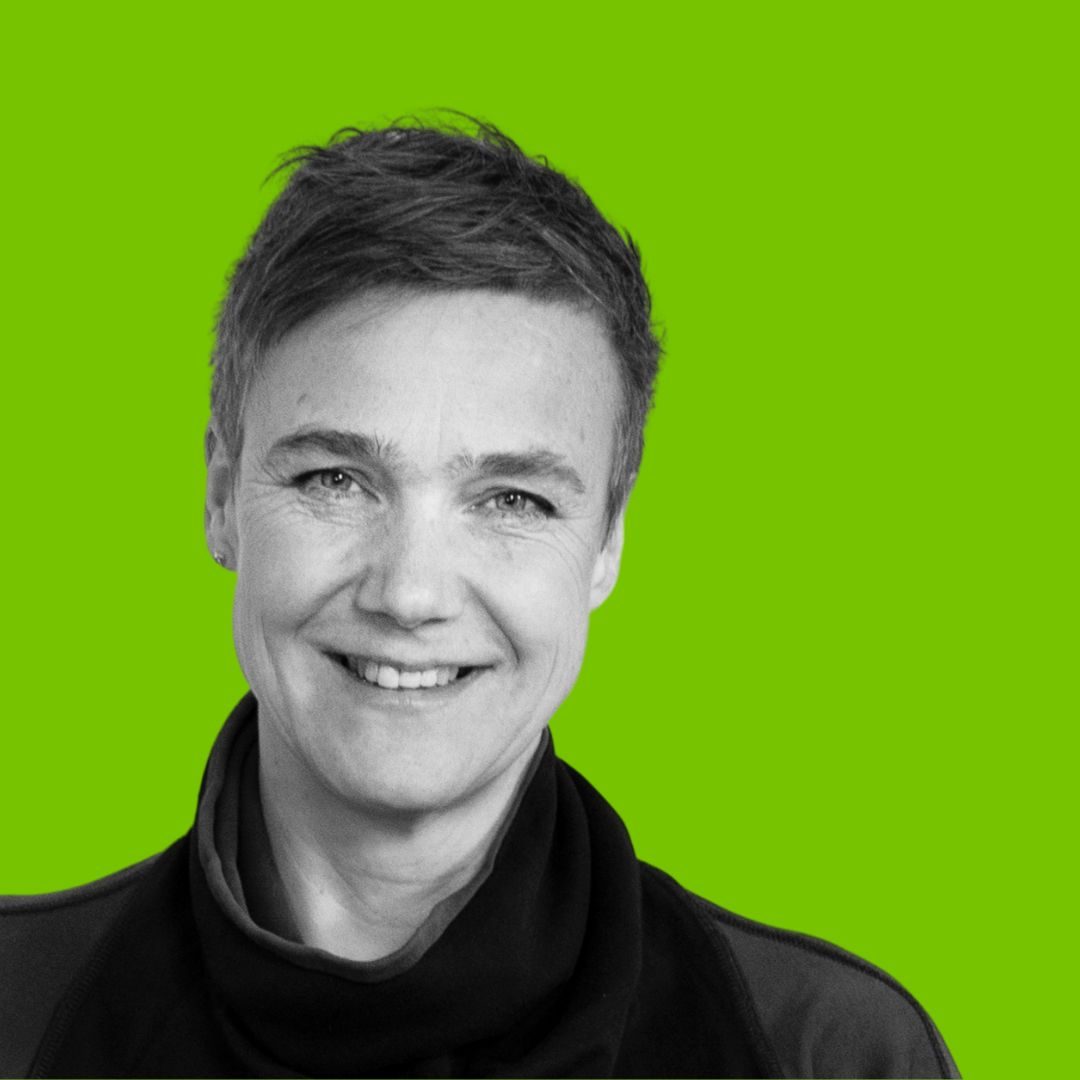
Britta Loschke
Britta Loschke was born into a large family in Leipzig in 1973. She lives and works in Berlin as a facilitator for large groups and deals with social power structures and ways to achieve a society of belonging.
kontakt@britta-loschke.de | www.britta-loschke.de
East and West in leadership and organisation – shaping patterns, dynamics and spaces for dialogue
How do East and West German influences manifest themselves in organisations – particularly in leadership, decision-making and cooperation?
In this workshop, we reflect on how deep-rooted experiences influence our consulting practice and everyday organisational life. Using the dialogue format „speaking and listening“, we open up a space in which experiential knowledge can be shared and new understanding becomes possible.
Participants experience the format in practice, explore its potential for their work, and receive inspiration for bringing sensitive issues and hidden dynamics in teams and leadership to light.
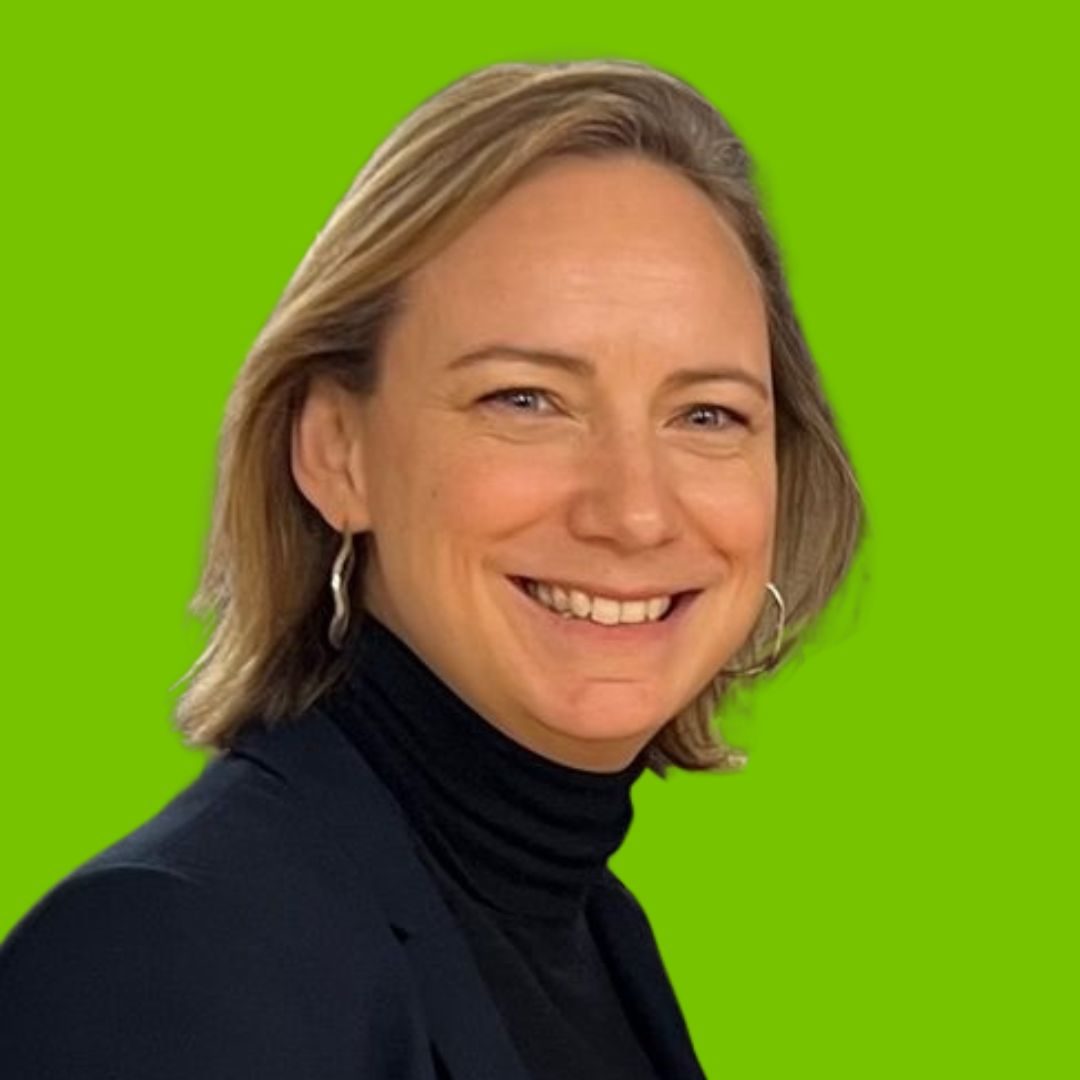
Katharina Göring
Katharina Göring has been researching visible and invisible East-West dynamics in our society for years. As a child of reunification and co-founder of the association „3te Generation Ost“ (3rd Generation East), she is committed to promoting dialogue about the impact of division and reunification. In Leipzig, she founded the initiative OSTWES(T)RÄUME, which examines individual and collective experiences.
As a systemic organisational consultant, she supports teams and managers in change processes, often in the context of digital transformation. She relies on dialogue-based methods to facilitate understanding and new perspectives. In this workshop, she combines her consulting experience with an invitation to explore East-West dynamics analytically and dialogically.
Interdisciplinary workshop laboratory: Post-reunification children in dialogue
Without a multi-perspective background, there is no future.
Artists Karolin Benker and Veronika Riedel invite you to a performative workshop that uses theatre, bodywork and autobiographical reflection to explore questions relating to the post-reunification generation: personal, political, poetic.
The workshop invites participants to step out of isolation and into encounter – and not only to recount history, but to embody it. The focus is on the question: How does history manifest itself in bodies, voices, memories – and what does that mean for us today?
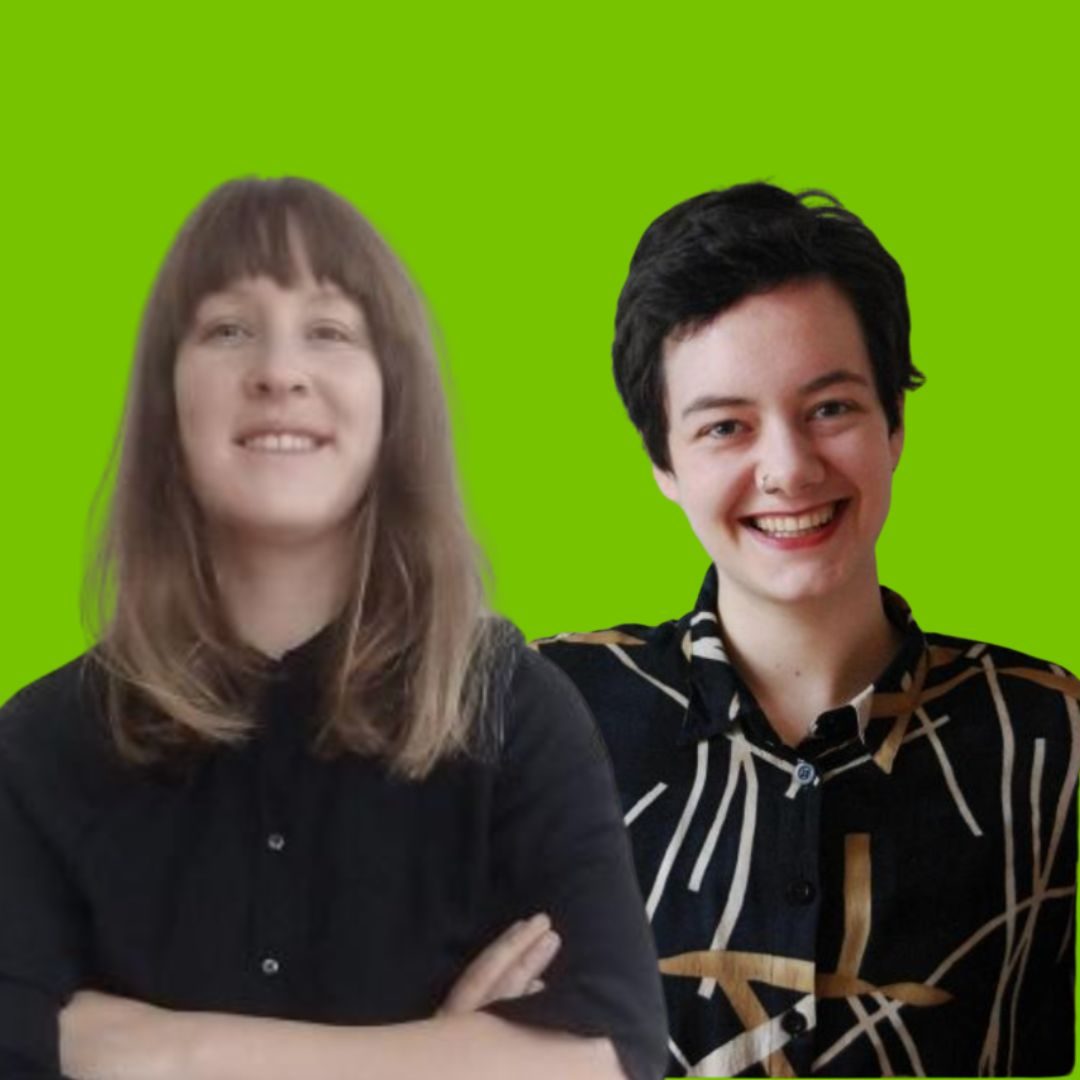
Karolin Benker & Veronika Riedel
Karolin Benker is a freelance theatre director and Co-founder of the queer-feminist Theaterhaus Ost in Halle (Saale). https://www.theapolis.de/de/profil/karolin-benker-1
Veronika Riedel, Bachelor's degree in Culture and Media education/theatre education BuT. Has lived and worked in Magdeburg since 2018, initially at the municipal theatre, then free. Engagement with the theatre of Oppressed since 2016. In addition to her theatre education work, Vero works as an illustrator.
When dialogue seems impossible – diverse German (and non-German) perspectives in exchange
What to do when communication fails, language is lacking and perspectives no longer align?
From various German and non-German perspectives, we explore how origin, language, power relations and socialisation shape our culture of conversation.
In a safe space, we make diversity visible, listen to each other – and look for ways to keep talking, even when it gets tough.
Not to resolve conflicts, but to create spaces in which differences do not divide, but rather unite and become a resource.
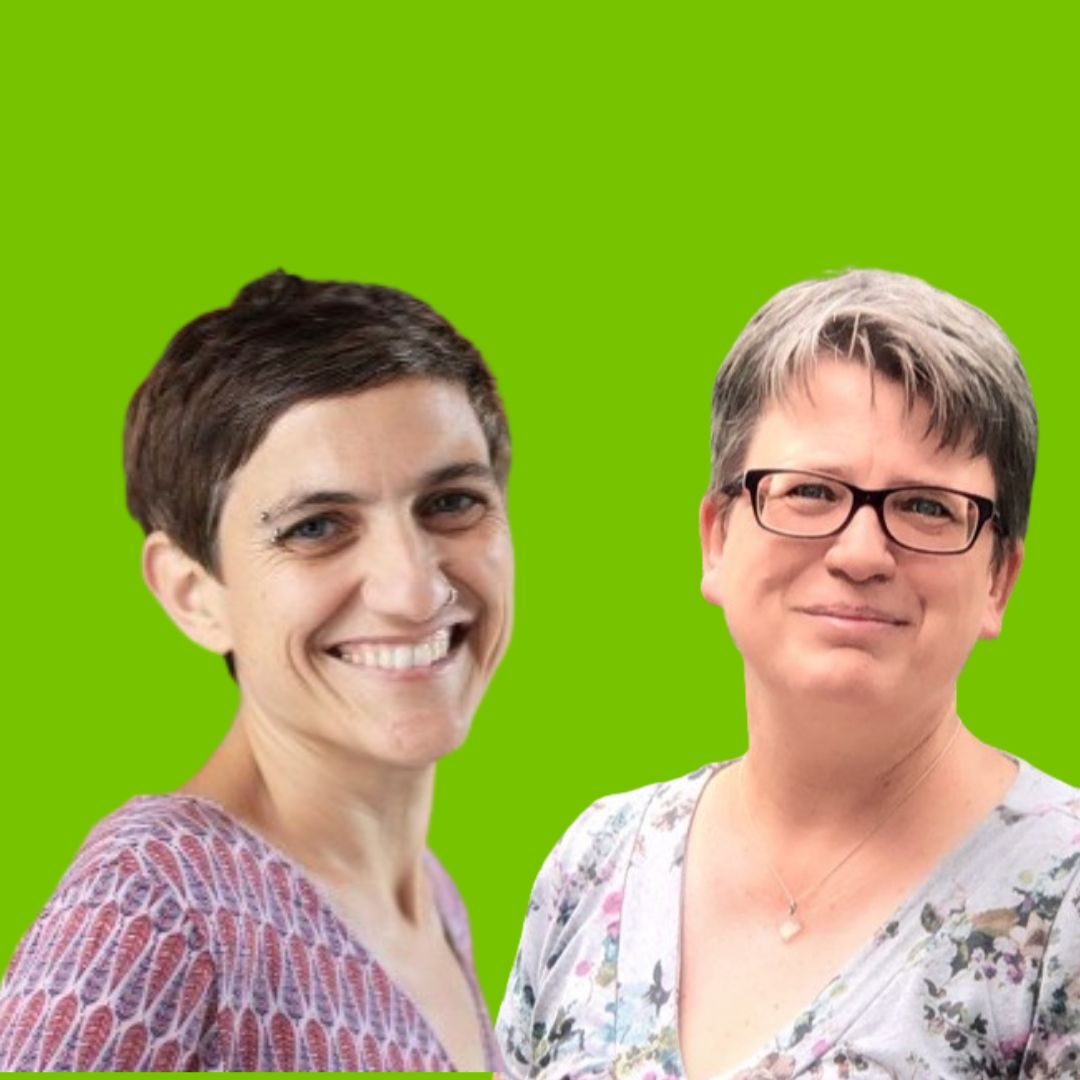
Agnes Sander & Sabine Ayeni
Agnes designs processes with people and organisations in challenging and conflictual situations. The core of her work consists of making existing resources visible and finding constructive – sometimes surprising – ways of dealing with conflict. www.agnes-sander.com
Sabine accompanies teams and organisations – often schools – in their transformation processes. Finding ways to make change fun and productive is what drives her. Whether it's building visions with Lego or using agile games to discover potential, Sabine uses whatever helps a team to develop. www.gruen-gelb-tuerkis.de
Team game East and team game West, what a question...
How teamwork functions in organisations is a topic that countless consultants, trainers and authors are preoccupied with, and there are almost countless methods and publications on the subject. Nevertheless: teamwork with people socialised in the East and teamwork with people socialised in the West... and then together? Are there actually patterns in the differences and peculiarities? What are the questions behind them?
With this workshop, the two consultants create a space in which to explore the topic of potential diversity based on experience.
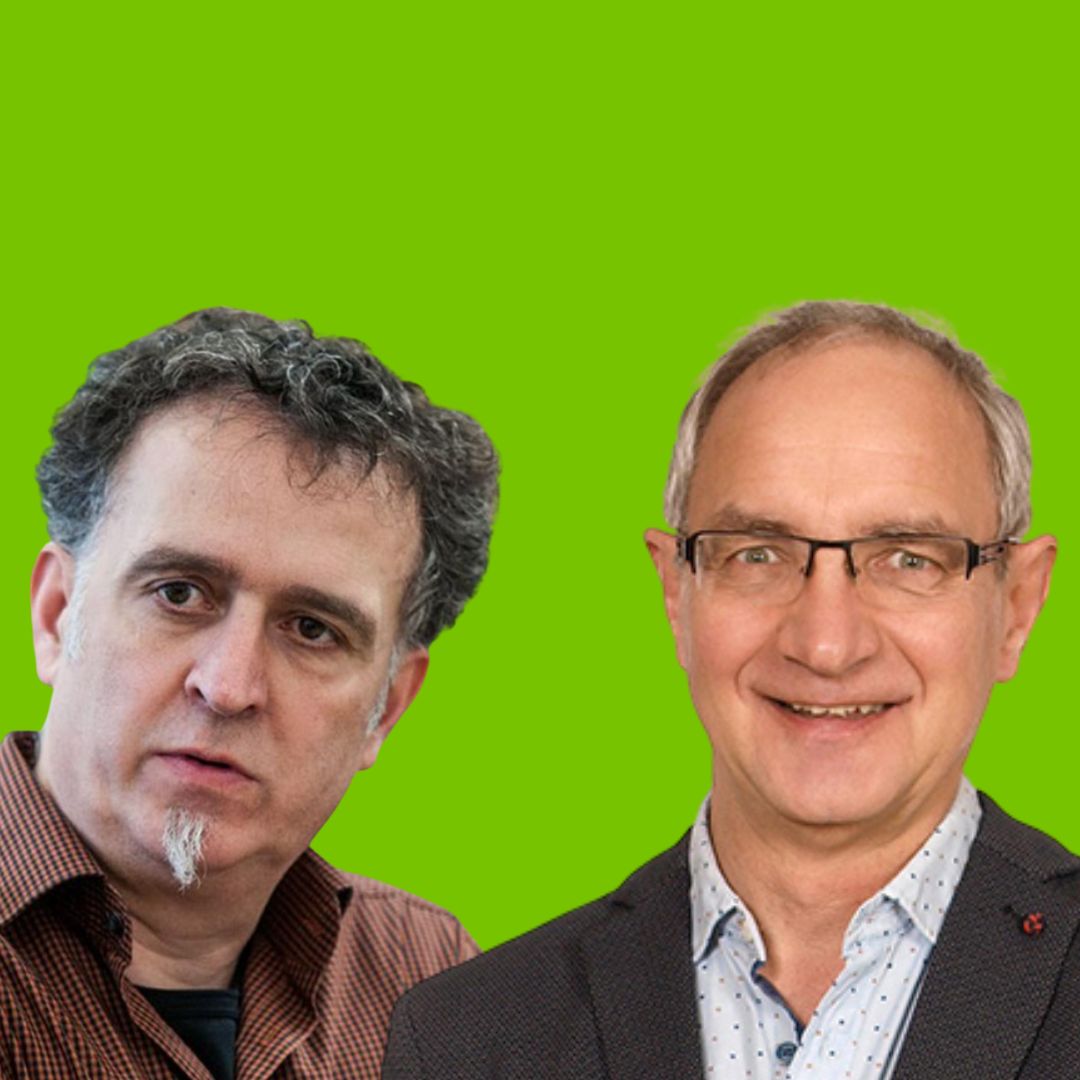
Michael Funke & Norbert Poppe
Dr Michael C. Funke from Leipzig works as a consultant and organisational developer and is active in the Consultant workshop Leipzig at home. He supports people in organisations through change by providing supervision, leadership training and coaching. With Norbert Poppe from the transformer house (Panketal/Berlin), who also works as an organisational developer and coach in similar fields, shares a common interest in dealing with increasing uncertainties and dynamics in society and organisations. Particular attention is paid to the strained interfaces between institutions and the diverse field of civil society, as well as the creation of networks as a response to complex problems. Here, different – regionally determined – horizons of experience can develop their own dynamics. Sometimes these seek their interpretations in rather stereotypical East-West views of reality. Developing a language for this and creating suitable space for co-reflection and co-creation is a common focus.
What literature can do: Talk about silence ...
The experiences of upheaval in eastern Germany have also led to silence between the generations. Literature is also providing impetus to break this silence. In recent years, voices from the younger generation in particular have been addressing the silence between the generations.
The focus is often on telling one's own story, which both reveals a breaking of silence and unlocks the potential for change.
Based on literary examples, the workshop invites participants to talk about silence, on the one hand using fictional stories to open up possibilities for speaking, and on the other hand to talk about their own experiences of silence.
Sandra Koch
Sandra Koch was born and raised in eastern Germany, lives in Halle and works as a research assistant at the Institute of Education at the University of Hildesheim. For several years, she has been researching children's books, particularly those from the former GDR, which can now only be found in archives or have been largely forgotten. She also enjoys reading and is delighted about the numerous new literary publications on East Germany and on East and West Germany.
Jeopardy – The Foresight Edition
After a brief introduction to structural change processes in East and West Germany, we will not only look back on the 35 years since the fall of the Berlin Wall, but also look ahead in playful question and answer sessions: What impact does climate change have on official decision-making processes? How do we articulate concerns, fears and hopes in organisational environments? These are some of the questions we want to use to take a look at the future of East-West German relations in 2060.

Christian Schoon
Christian Schoon is a futurologist with a master's degree and studied human geography and educational science at bachelor's level. For Prognos AG, he supports projects on structural change in eastern and western Germany, including the Citizens' Advisory Council for Structural Change in Saxony-Anhalt.
Christian Schoon | LinkedIn and Communication & Participation | Prognos
How does racism manifest itself in eastern and western Germany – and how do historical narratives continue to influence our perceptions today?
In this workshop, we will examine different experiences, gaps and self-images of both German states and explore, whether and how this has given rise to two different forms of „Happyland“: protected spaces in which racism is denied or trivialised. Together, we question these patterns, exchange perspectives and sharpen our understanding of structural inequality.
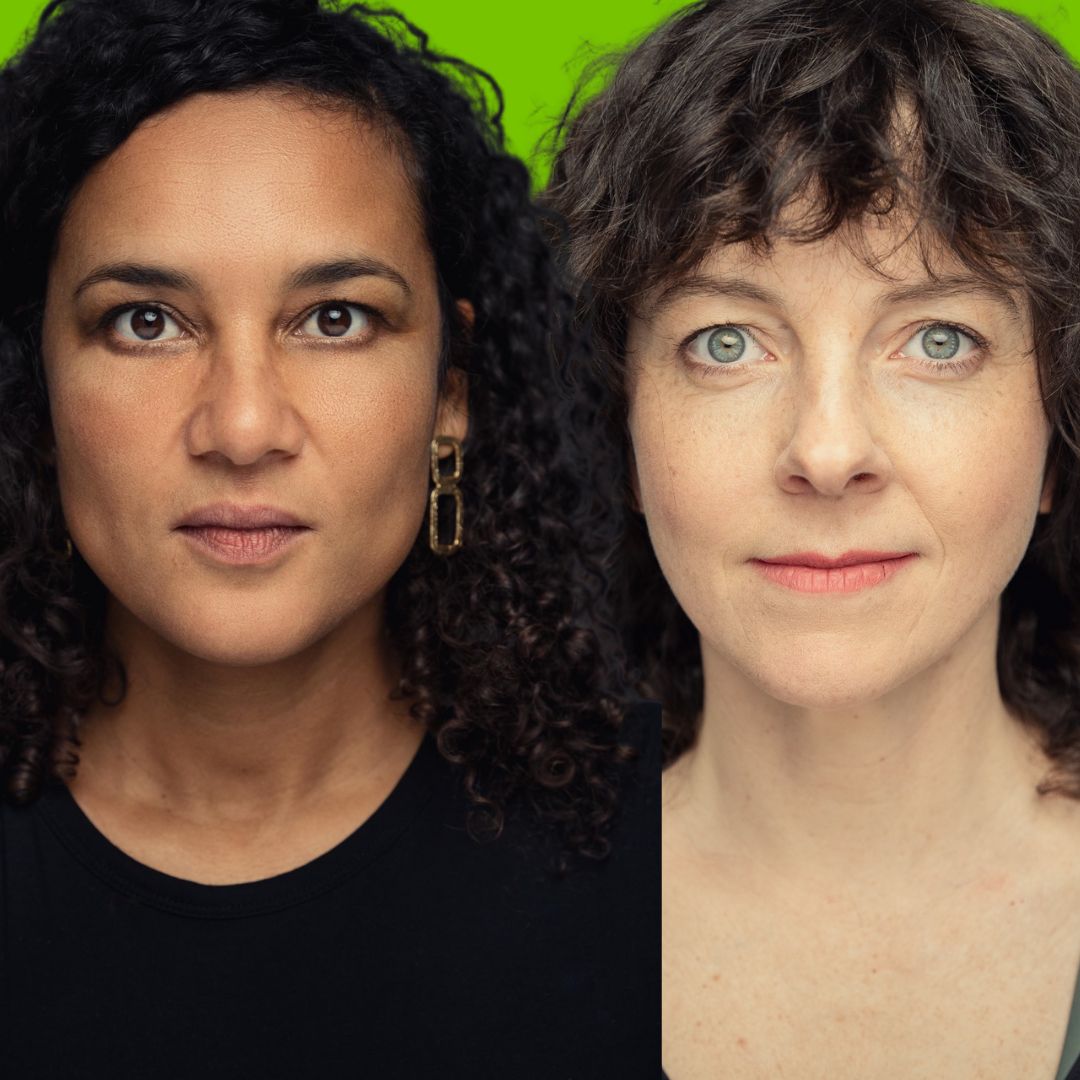
Juliane Dieckmann & Josephine Ulrich
Juliane Dieckmann and Josephine Ulrich grew up in Rostock on the Baltic Sea after German reunification. They are attached to their homeland and are committed to a democracy that is critical of racism and inclusive children's literature.
Juliane Dieckmann is director of studies for political youth education at the Protestant Academy of the North Church and author of children's books. „Through Rostock with Max and Mila in ABC. Josephine Ulrich is the coordinator for citizen participation in the city of Rostock and a diversity trainer.. Together, they are committed to anti-racism education and the participation of children and young people.
 Deutsch
  English (UK)