


SOCIUS Organisationsberatung gGmbH - which was founded in 1998 and is now a subsidiary of SOCUS eG - has been represented by Christian Baier and Andi Knoth as Managing Directors for the past 15 years; from 2026, Lysan Escher and Andi Knoth will form this tandem.
Why have we changed this “running system”?
Shared responsibility per role board
Since 2018, we have organised our collaboration according to sociocratic principles and shared responsibility in roles and make decisions by consensus. We do not need functions such as management internally, as they are not linked to any responsibility or decision-making powers. Decisions whose relevance affects us as an overall organisation - whether in the cooperative or in the gGmbH - are made jointly by consensus without hierarchy. The management of the gGmbH therefore only has formal relevance.
In our understanding, it is therefore also a role that is allowed to rotate. We call these reels “travelling reels” and now it is allowed to travel.
Practice what you preach
Even if this role has no relevance for our decision-making processes, it is still perceived externally. With two male managing directors, we have been sending out a patriarchal signal for a long time, even though we have had a core team of seven women and three men at SOCIUS for several years now.
When the five of us decided to change the management of the gGmbH back then, it was exactly right for us that Christian and Andi took over this position. And now it was exactly right to change this.
Get into action
What prevents us from changing? Nothing! The only thing that could ultimately prevent us from realising this idea is trusting each other. As we don't lack basic trust with, towards and among each other, it was easy for us to take action here. Sometimes, however, we perceive both ourselves and others that we accompany true: the challenge lies not in analysing, but above all in implementing possible steps. No matter how fundamental trust is. In this case, we succeeded well and quickly.
The process
After we had all been aware for some time that this change was imminent from a feminist point of view, we decided at our team retreat in Brač in September 2025 began to talk more intensively about the change in the representation of the gGmbH. A decision was then reached by consensus in a sociocratic decision-making process - with image-forming and opinion-forming rounds, a fully formulated proposal and finally the question of the serious objection (there was none).
The result: Lysan takes on the role of legal representative as Managing Director of SOCIUS Organisationsberatung gGmbH and shares this role with Andi.
Reflections
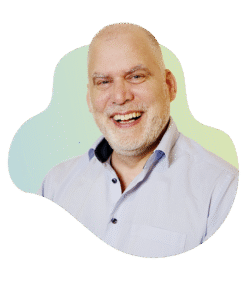 How do we combine a bourgeois legalised world (“authorised to represent”) with our interest in working together in a creative and lively way? I don't want to question the responsibility that managing directors feel at all. Especially in organisations that follow more traditional structures (and there are many good reasons for this), it should not be underestimated. In the 15 years or so since I took on the role, there have been perhaps five issues in which I have acted as “managing director”. The configuration as a sociocratic organisation allows us to work together more fluidly and more in line with our needs and desires than hierarchical systems.
I am pleased that we have taken a step in this direction. I find it easy to “hand over” the management: the formal result of the authorisation to represent the company is in line with our values and it's not witchcraft. And there is a great deal of trust in Lysan and Andi - and in the entire team - to manage crises that require formal management well together.
This requires mutual trust: since 2018, we have been looking at our processes and “practising” sociocratic structures and their concrete practice in everyday life. This leads to trust. Trust in those who represent the gGmbH externally. And trust in the entire team that they will be supported in crises. Now this role is moving to a new tandem and so - if the processes work - this can become a rotating role in the future.
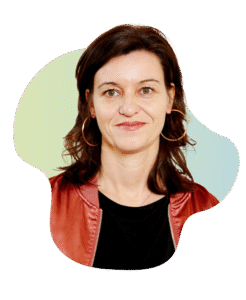 What was particularly interesting for me in our process was the practical examination of our practised sociocratic culture and structure on the inside and the hierarchical legal form of the gGmbH on the outside.
It gave me and us as a team the opportunity to once again take a very practical look at the tension between the discrepancy of self-organisation in hierarchical legal forms. In my day-to-day work as an organisational developer, I am constantly confronted with these areas of tension and challenges at the interface between the legal form and the operating system of the organisation. It is then helpful to have a deep understanding of how difficult it is - especially when it becomes tension-based - not to follow the socialised autopilot and still act hierarchically or at least informally with power.
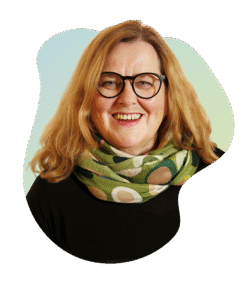 From my perspective, there have been many steps in the process towards a self-organised, sociocratic organisation. We took one of the biggest steps back in 2018 on the 20th anniversary of SOCIUS, when the shareholders of the gGmbH sold their shares to the cooperative, making it our “main playing field” for supporting organisations. And that's not all: at that time, all of the SOCIUS consultants involved became board members of the eG, meaning that we jointly took full responsibility for our joint endeavour: Equal, on an equal footing, liable for the actions of the others in the context of their decisions for the cooperative. That's why - in my view - the sociocratic form and, above all, decision-making by consensus and the role board became much more important, because it was clear: we don't make big decisions against a serious objection AND we need a system that enables us to act quickly: the role board.
With the farewells and welcomes of the following years, we have not called this basic structure into question again, but have only ever developed it more consistently. The Cooperative Societies Act refers to board members, the Limited Liability Companies Act refers to management, and we are aware of the importance of the associations that language triggers; of the hierarchies and ranks that are associated with it. We wanted to move away from this in our inner SOCIUS constitution and at the same time remain compatible with the “bourgeois world”. That's why we opted for the phrase “authorised to represent”, because that's what it's all about in legal terms.
With the change in the management of the gGmbH to a multi-gender duo, we are now taking a step - also visible to the outside world - that more accurately reflects our gender reality.
It was an exciting process for us and we look forward to your feedback, experiences and questions about the tensions and interdependencies between the civil world and the interaction within the organisation.

 Deutsch
  English (UK)