
oe-day 2020 Berlin
oe-day 2020 Berlin
oe-topia - Organisational development for social change
On 4 September in refuge, Berlin/Neukölln 2020 Online
oe-topia - Organisational development for social change
On 4 September in refuge, Berlin/Neukölln 2020 Online
The oe-tag live in Berlin on 4 September 2020!
The oe-tag in Berlin took place on 4 September at the Refuge in Neukölln We would like to thank all participants for your contributions and for helping to shape the day together.
For those interested, we are leaving the workshop descriptions online and invite you to take a look at the pictures and impressions of the day.
This year's oe-tags team,
Simon Mohn, Jana Hornberger and Lino Zeddies
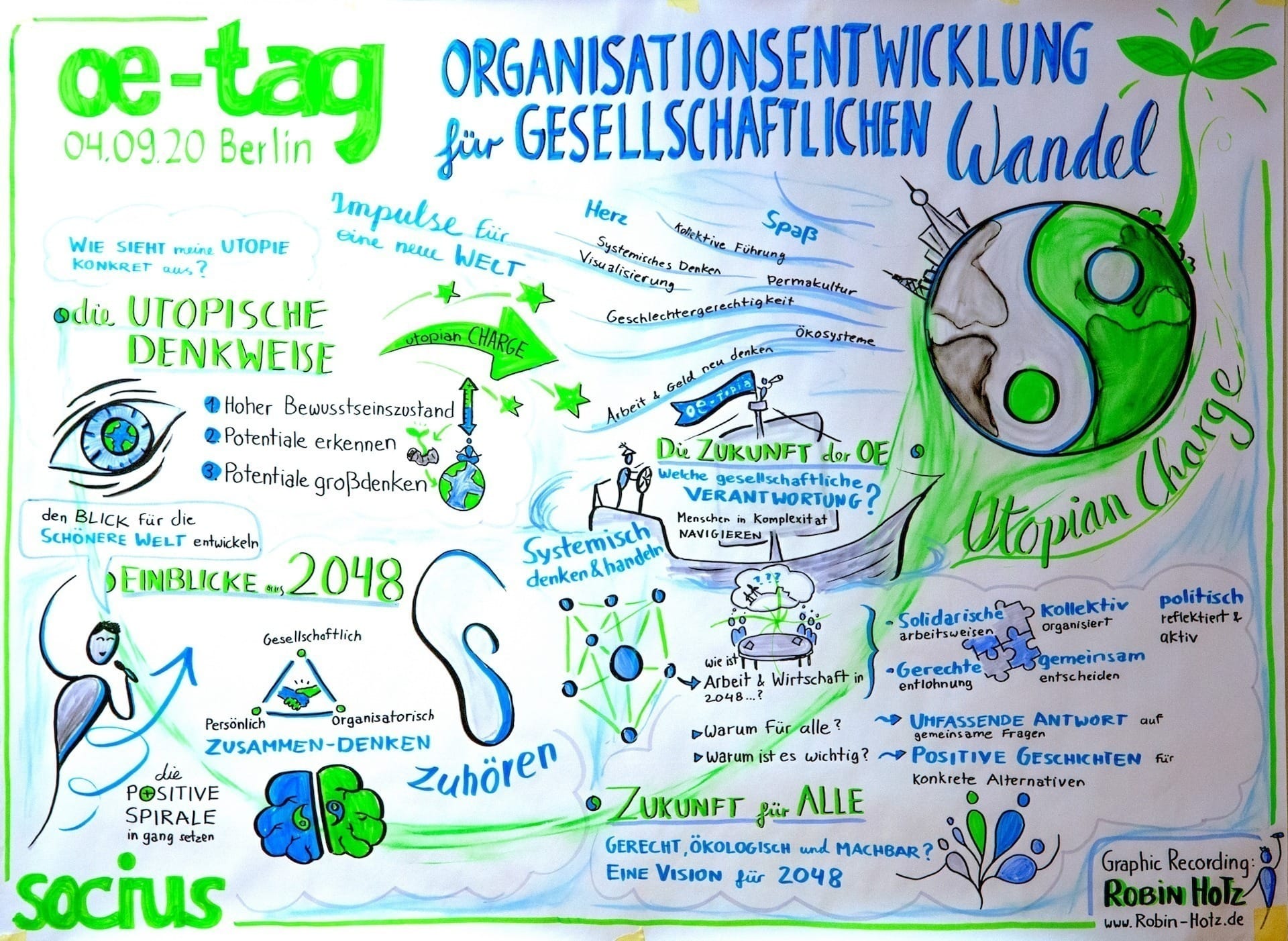
What happens when organisations set out and say, „We are now living what we want to achieve out there within ourselves”?
This year, we want to work together to describe the path to the utopia of socially engaged organisational development.
oe-tag
The oe-tag - Forum for non-profit organisational development has been held once a year since 2008.
The oe-tag sees itself as a place for
_Exchange
_Inspiration
_Experiment
where consultants, managers and anyone interested in organisational development are welcome.
For over 10 years, joint developments have been taking place here in various formats.
Programme oe-day 4 September 2020 Berlin
09:00 admission
09:30 Welcome, keynote speech: oe-topias (Simon Mohn), utopian interview (Lino Zeddies, Jana Hornberger)
10:30 refreshment break
11:00 Forum block A
12:30 lunch break
2:00 p.m. Keynote: A future for everyone – fair, ecological and feasible!? A vision for 2048 (Charlotte Hitzfelder, Conceptual Work New Economy)
2:45 p.m. Forum block B
4:15 p.m. refreshment break
4:45 p.m. Harvesting the forums and reflections on the future
5:30 p.m. Short refreshment break
5:45 p.m. Keynote: The future of OE – what social responsibility? (Andreas Knoth)
6:45 p.m. Joint conclusion
7:00 p.m. end
Workshop overview online

Stefan Diefenbach-Trommer
Forum block B – Afternoon
Workshop: Trade non-profit status for freedom – or how the legal framework could be improved
Ever reached the limits of non-profit status? Other countries have NGO laws, which are often restrictive. Germany has the fundamental right to freedom of association and non-profit status. This tax status largely defines which organisations are considered part of civil society. In exchange for tax benefits for donors, organisations commit themselves to defined charitable purposes. Those who find this too restrictive forego the status – and with it, often also funding and social acceptance.
How could it be any different? Is this tax break even necessary? Can a law ever reflect the breadth, diversity and innovative power of civil society organisations? Instead of a list of purposes decided by the Bundestag, would it be better to have a specialist commission that generally assesses the charitable status of an initiative? And what does the Home Secretary have to do with it?
An invitation to dream, combined with a brief introduction to the functions of civil society organisations and current
Border issues.


Anna Baumgart
Stefan Schneider
Forum block B – Afternoon
Workshop: Introduction to Collective Leadership
In this workshop, you will learn about the principles of collective leadership and the conditions necessary for it to emerge in an organisation. Concrete practical examples and a joint exchange will provide you with hands-on inspiration for your own working environment. You will also have the opportunity to explore and gain a small impression of how you might feel in a culture where human interaction, potential development and team effectiveness are intertwined. In today's increasingly complex world, collective leadership is more important than ever in order to meet challenges with the intelligence of the collective.

Robin Hotz
Forum block A – Morning
Workshop: Seeing systems and making them visible
How can we use visualisations to understand systems and make utopias visible? In this practical workshop, we will learn basic techniques of visualisation and systemic thinking. Together, we will explore the potential of simple images to understand complex topics. Can this practice promote a change in consciousness and reveal collective blind spots? No prior knowledge is required, just curiosity and a desire to create!

Lino Zeddies
Forum block B – Afternoon
Workshop: Money in organisations – explosive or binding force?
Money is one of the most powerful institutions in our society. Money creates freedom, opportunity and success. But money also creates oppression, exploitation and division. Despite its immense importance, most organisations rarely question the typical way money is handled. The topic of money is often associated with tension, conflict, scarcity, fear, shame and dissatisfaction.
It is therefore worthwhile to reflect on your usual approach and try out progressive approaches to dealing with money.
In this interactive workshop, we will therefore explore the dynamics of money on people, relationships and organisations. We will also present inspiring best practices, exercises and options for organisations when it comes to dealing with money, such as pay-what-feels-right payment models, transparent salaries, needs-based approaches, reflection rounds and financial cooperatives.
With a new perspective and practical tools, the powerful tool of money can be used more wisely in the everyday life of organisations.

Carolin Gebel
Forum block B – Afternoon
Workshop: Strengthening resilience and self-organisation with permaculture principles
Team and organisational development that makes sense - for us and for the world we live in. This is an important motivation for applying permaculture principles to social systems - especially in these crisis-ridden times. As a sustainable development approach, permaculture not only offers clever ideas for garden and landscape planning. With its fundamental ethical values - earth care, people care, fair share - individuals, teams, organisations, society and ecosystems and their interactions are viewed as a living system. Holistic observation, flexible planning and responsible action are among the fundamental permaculture principles. With this co-creative workshop, I invite you to be inspired by permaculture in your own leadership behaviour: What added value does permaculture design bring to the development of resilient and sustainable systems? What characterises the permacultural mindset and how can we benefit from it in our everyday leadership and management work? How can destructive patterns of cooperation be recognised and translated into context-specific constructive pattern language? How can permaculture principles be used in management to promote cooperation, self-organisation and team spirit? And why is permaculture fun?
Annegret Wulff
Andreas Knoth
Forum block A – Morning
Workshop: Impact and resilience in ecosystems
Ecosystems are booming in the organisational world: whether business ecosystems, digital competence networks, collective impact alliances or activist communities – the metaphor of an ecological community of destiny is currently very popular. Organisational ecosystems are characterised by the loose coupling of actors within soft system boundaries who connect symbiotically to strengthen their own effectiveness.
The workshop is a journey into the inner workings of ecosystems in the field of civil society development:
- What potential and challenges lie in the strategic shift towards an ecosystem approach?
- How can the OE contribute to ensuring that ecosystems function in a vibrant and sustainable manner, and what attitudes and instruments does it need to achieve this?

Tobi Rosswog
Forum block A – Morning
Workshop: Work, property and money – how to live change?
The social constructs of work, property, money and the logic of exchange shape our relationships and thought patterns. The workshop addresses specific questions:
- How are these constructs related to each other?
- What influence do they have on our everyday lives, organisations and society as a whole?
- (Why) Could it be important to live other self-evident truths in order to bring about change?
The focus will be on an open exchange of experiences from practical life and perspectives of a society beyond work, property, money and the logic of exchange.

Anna Reisch
Forum block A – Morning
Workshop: From division to connection: gender issues at work
The workshop aims to facilitate a utopian exploration of gender and organisation. How can we achieve an appreciative and empowering work culture that understands, resolves and integrates old wounds related to sexism and devaluation struggles? How can we succeed in creating a freer, more beautiful and authentic culture of togetherness? And what do we need, individually and collectively, to achieve such a utopia? We will work on this biographically, theoretically and practically. All people who want to step out of the current division and hardening and feel invited to constructively, honestly and playfully design the utopia of a successful connection are welcome to join us!
Pause – Play – Move forward. Playing with oe-topia
BREAK
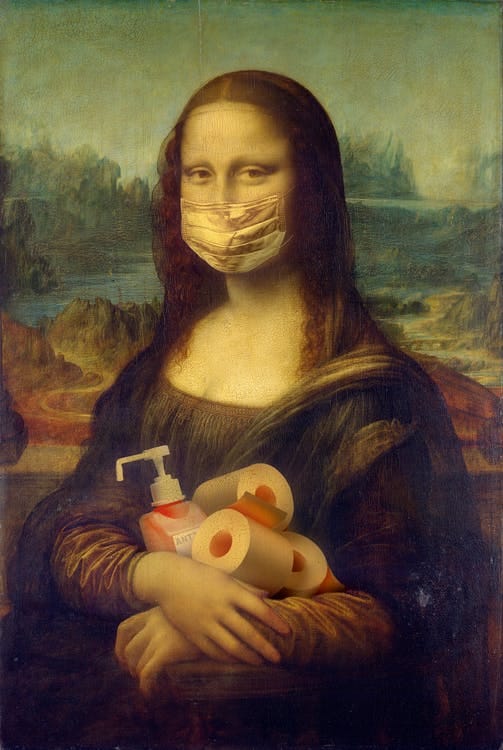
Since mid-March 2020, we have been experiencing a collective pause in Germany and around the world. The lockdown to combat the COVID-19 pandemic has presented us with unprecedented challenges, both individually and collectively: contact restrictions, the paralysis of public life, working from home, and the closure of schools and nurseries. This has confronted the world of work in general, and our everyday life at SOCIUS in particular, with a completely new situation: work is suddenly being done from home, the days are filled with online meetings, and instead of live consultations, support and development are now taking place digitally.
It has only recently become clear that the oe-tag can still take place live, and after numerous changes, uncertainties and postponement ideas, we are now very experienced in approaching the oe-tag flexibly and adapting it to the circumstances.
PLAY
Following the practical model of „pause-play-move forward“, we place the oe-tag on 4 September 2020 in the „play“ phase. In this sense, it means playing with scenarios, envisioning and developing what significance oe-topia can actually have in the context of such a crisis. What might the future of organisational development look like, and how do we want to shape it together based on our current experience?

Congruence between inside and outside – what has changed as a result of coronavirus?
We have all certainly felt that the external conditions and developments of recent months have had an impact on us and on society. That is why we would like to come together again on oe-day to look at and identify what the external changes have done to the internal structure of organisations. Building on this, the understanding of the coronavirus crisis as a catalyst for development offers an opportunity to gather insights into the quality of organisational changes.
- What inconsistencies have emerged, or what previously held narratives about an organisation have been shaken?
- Where did the organisations delude themselves about something that was not sustainable in the crisis?
- What treasures became apparent during the difficult times that had previously been overlooked or only marginally noticed?
- What developments have been set in motion by the acceleration of development?
Let's design oe-topias on 4 September
At the moment, rapid changes are opening up many opportunities for us, and many people are talking about not wanting to return to where they were before the coronavirus pandemic. We therefore want to use oe-tag Berlin to continue writing the history of organisational development into the future. To do this, we want to adopt a utopian mindset and ask curiously: What utopias exist for your organisations or the organisations you support? In which direction do you want to develop organisational development itself in order to bring these dreams a step closer to reality?
Together with you, we want to design, compare and synthesise oe-topias and use the momentum to consciously accompany and facilitate social change.
In order to address the open questions in a multifaceted way, we view the day as a mixture of reflection space, workshop space and ideas workshop. In a workshop phase in the morning, we open up the space to test methods and approaches in the context of the new situation and to consider what utopian contributions they can make.
In the afternoon, we would like to use reflections, small group phases and scenario drafts to map out the path to utopia as concretely as possible.

MOVE FORWARD
We want everyone involved to say at the end of the day, “I now know what kind of future I want to work towards in my role!” Everyone should have the opportunity to take away a personal, inspiring narrative about a bright future and use it to move forward.
 Deutsch
  English (UK)